
Jumio
Jumio · Ranked #7 of 8 in Identity Verification (KYC) APIs
Long-standing AI-powered IDV/eKYC/AML platform with broad native + cross-platform SDKs, but fully sales-gated with no public pricing.
Enterprise eKYC/AML at global scale
Overview
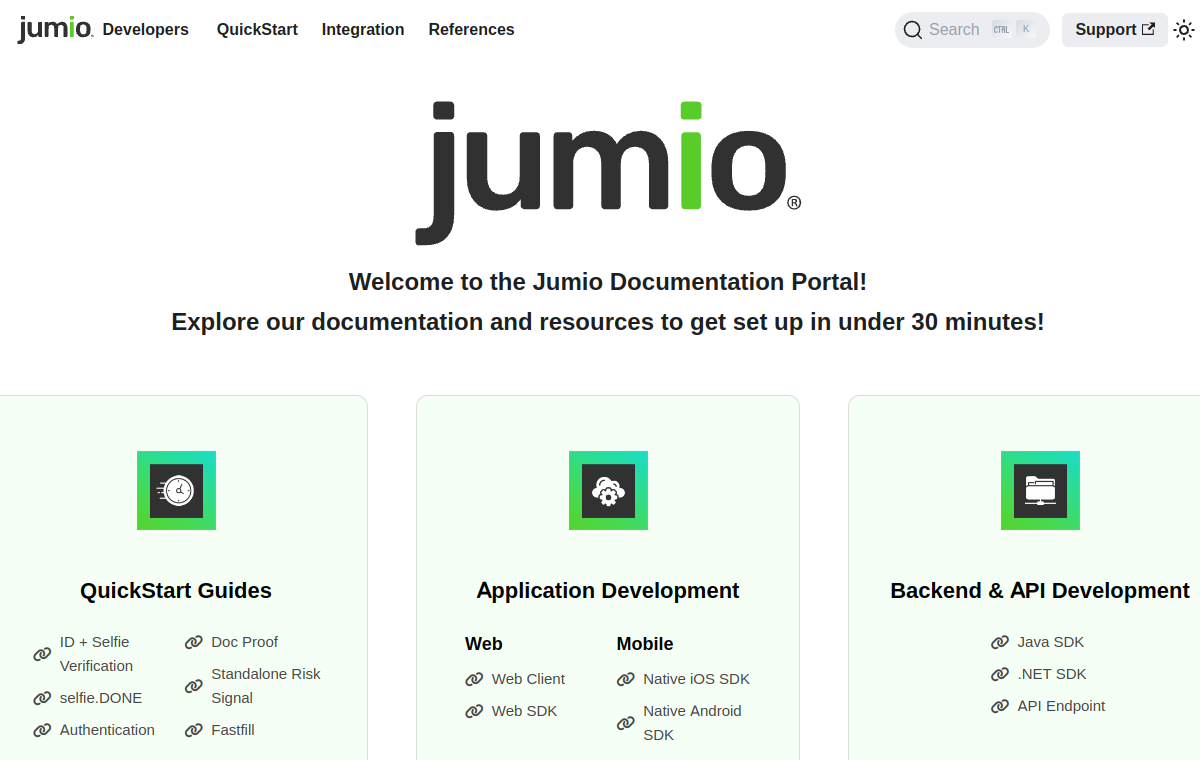
Jumio is one of the longest-established enterprise identity verification (IDV/KYC) vendors, founded in 2010 and now positioned as an "identity intelligence" platform. Its core offering is the KYX Platform, an orchestration layer that combines document verification (5,000+ ID templates across 200+ countries), biometric face-match with ISO 30107-3 certified liveness/presentation-attack detection, AML screening (sanctions, PEP, adverse media) and ongoing monitoring. It sells primarily into regulated, high-compliance verticals, banking, fintech, crypto exchanges, online gambling/iGaming, and marketplaces, where document coverage breadth, fraud catch-rate, and audit-ready compliance reporting matter more than rock-bottom price. Jumio claims over 1 billion transactions processed and is regularly placed as a leader in analyst evaluations (e.g., QKS Group Spark Matrix).
Where Jumio wins is enterprise depth: very broad global document and digital-ID coverage, strong fraud/deepfake defenses, mature SDKs (native iOS/Android plus React Native, Flutter, and Cordova plugins) with public GitHub repos and example apps, and a well-regarded support organization (G2 reviewers score support and ease-of-use around 9.0). Where it loses is at the small/mid-market end and on end-user experience. Pricing is fully custom, quote-only, with no free tier or self-serve trial and reported annual contract minimums in the $25k–$100k+ range, which prices out startups and pushes them toward self-serve competitors like Sumsub, Veriff, Didit, or Onfido. The most consistent criticism is consumer-facing: Trustpilot is dominated by frustrated end users (gamblers, account holders) whose legitimate documents or selfies were repeatedly rejected, plus complaints about lighting sensitivity and occasional outages.
The net picture is a polarized one that is common for IDV incumbents: B2B buyers on G2/Gartner rate Jumio well (≈4.0/5 on G2) for fraud prevention, compliance, and support, while the public Trustpilot rating is low because it captures the friction of false rejections rather than buyer satisfaction. For an enterprise that needs global coverage, regulatory defensibility, and white-glove integration help, Jumio is a strong, safe choice; for a cost-sensitive team wanting transparent pricing and a frictionless pass-rate, it is often overkill.
How this score is derived
The APIbenchmarks Index is a weighted sum of four dimensions, each scored on an absolute 0–100 reference scale. See the methodology for every mapping.
| Dimension | Score | Weight | Contribution |
|---|---|---|---|
| Documentation & DXComprehensive public docs at documentation.jumio.ai plus open GitHub repos (mobile-sdk-ios, mobile-sdk-android) with integration guides and sample apps, though API v3/KYX versioning adds some complexity. | 78 | 30% | 23.4 |
| ReliabilityOperates at billion-transaction scale and is analyst-rated a leader, but Trustpilot reviews cite occasional full outages and unresponsive support during incidents, and no public uptime SLA figure is published. | 85 | 25% | 21.3 |
| Ecosystem & SDKsMature SDK family (native iOS/Android, React Native, Flutter, Cordova) and an orchestration platform spanning document, biometric, and AML modules, widely integrated across fintech, crypto, and iGaming. | 78 | 25% | 19.5 |
| AccessibilityQuote-only pricing with no free tier, no self-serve trial, and high contract minimums makes it largely inaccessible to startups/SMBs, requiring a sales engagement to even begin. | 45 | 20% | 9.0 |
| APIbenchmarks Index (ABI) | 73.2 | ||
Table 1. Derivation of the ABI for Jumio. Contribution = score × weight; the index is their sum.
At a glance
- Vendor
- Jumio
- Pricing model
- Custom per-transaction quote
- Free tier
- No
- Official SDKs
- 7 languages
Pricing
| Custom / Quote-only | Custom | No public list pricing; per-verification fees decrease with volume. Third-party sources cite roughly $0.90–$2.30 per KYC verification. |
| Annual contract minimum | ~$25,000–$100,000+/yr | Reported contract minimums depending on volume and modules (per third-party pricing analyses; not officially published). |
| Add-on modules | Priced separately | AML screening, watchlist/PEP monitoring, ongoing identity monitoring, and advanced fraud detection billed on top of base verification. |
| Integration support tiers | Bundled / tiered | Standard (docs/videos), Advanced (up to 5 hrs with experts), Premium (unlimited expert access). |
Key features
- •Document verification across 5,000+ ID templates (passports, driver's licenses, national/ID cards) with MRZ/HRZ checks and hologram detection
- •Biometric 1:1 face match with certified liveness / presentation-attack detection (ISO 30107-3)
- •Additional biometric checks: age estimation, sleeping-person, multiple-people, and face-morphing detection
- •AI-powered AML screening and monitoring (global/regional sanctions, PEP lists, adverse media)
- •Global digital ID acceptance (e.g., mobile/government digital IDs) at scale
- •KYX orchestration platform for onboarding plus continuous/ongoing monitoring
- •Deepfake, mask, and replay-attack defenses with regulator-facing PAD scoring
- •Web and mobile capture flows with default or customizable UIs
Official SDKs
Strengths & trade-offs
- +Very broad global coverage: 5,000+ ID document templates across 200+ countries and territories
- +Strong biometric and anti-fraud stack: ISO 30107-3 certified liveness/PAD, deepfake, mask, replay, and face-morph detection
- +Unified KYX orchestration platform combining document, biometric, AML/PEP/adverse-media screening, and ongoing monitoring
- +Mature, well-documented SDKs with public GitHub repos: native iOS/Android plus React Native, Flutter, and Cordova plugins
- +Highly rated support and ease-of-use by B2B buyers (G2 support and ease-of-use scores around 9.0)
- +Analyst-recognized enterprise leader with billion-transaction scale, strong fit for regulated/high-risk verticals
- –Quote-only pricing with no free tier, no self-serve trial, and high contract minimums (~$25k–$100k+), inaccessible to startups
- –Add-on modules (AML, monitoring, advanced fraud) priced separately, inflating total cost 30–60%
- –Poor consumer-facing Trustpilot reputation: frequent false rejections of legitimate IDs and selfies
- –Liveness/face capture can be temperamental with lighting and webcam quality, hurting end-user pass rates
- –Reports of occasional full service outages with slow support response during incidents
- –Name-matching rated comparatively weak (G2 ~7.7) versus other capabilities
What developers say
G2 4.0/5 (22 reviews); Trustpilot low (~1.5/5, ~85 reviews)
B2B buyers praise Jumio's fraud prevention, support, and ease of use, while consumer end-users on Trustpilot are heavily negative about false rejections and capture failures.
“Jumio Identity Verification excels in Ease of Use with a score of 9.0 and Quality of Support rated 9.0, with users appreciating the responsiveness of the support team.”
Key figures
| G2 aggregate rating | 4.0 / 5 (22 reviews) | G2 ↗ |
| Ease of Use (G2 sub-score) | 9.0 / 10 | G2 ↗ |
| Quality of Support (G2 sub-score) | 9.0 / 10 | G2 ↗ |
| Name Matching (G2 sub-score) | 7.7 / 10 | G2 ↗ |
| Price per KYC verification | $0.90 – $2.30 per verification | HyperVerge pricing analysis ↗ |
| Document coverage | 5,000+ ID templates across 200+ countries/territories | Jumio features page ↗ |
| Transactions processed | 1 billion+ transactions | Jumio press release ↗ |
Compare Jumio head to head
Sources
- https://www.jumio.com/features/
- https://www.jumio.com/kyc-apis/
- https://documentation.jumio.ai/docs/developer-resources/SDKs/introduction
- https://github.com/Jumio/mobile-sdk-ios
- https://www.g2.com/products/jumio-identity-verification/reviews
- https://www.trustpilot.com/review/jumio.com
- https://hyperverge.co/blog/jumio-pricing/
- https://beverified.org/providers/jumio/
- https://www.jumio.com/about/press-releases/global-digital-id-acceptance/
Figures last verified 2026-06-27. Spotted an error? corrections@apibenchmarks.com